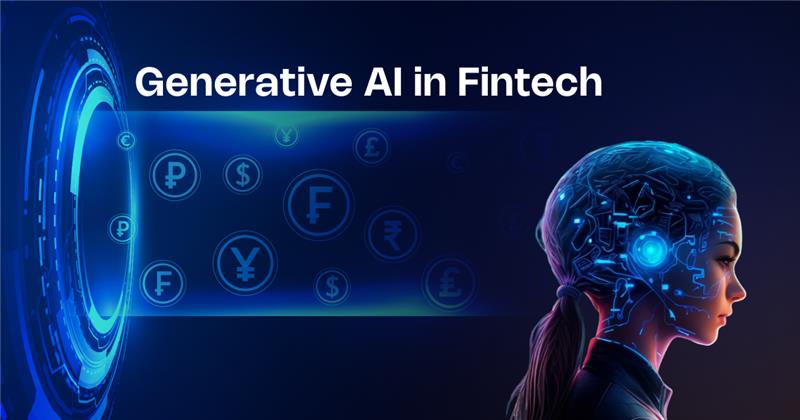
Generative AI in Fintech: Role, Future & Benefits
Generative AI will transform how you look at financial services because it makes apps smarter, faster, and more insightful. Digital payments are no longer the focus of Fintech; now it applies smart systems to enhance lending, investments, and fraud detection. That is why AI is present in the banking industry, wallets, as well as finance platforms today. Here in this blog, you will learn about its role, its practical effect, the main advantages of it, and how it is changing the daily financial experiences.
What is Generative AI and How Does It Fit Into Fintech?
Generative AI is an AI systems that generate outputs like insights, predictions, recommendations, and automated conversations based on patterns that are present in financial data. You are experiencing gen ai in fintech when the apps are creating spending recommendations or reports, or investment recommendations based on your background, rather than simply showing you the raw numbers.
Where it fits best in fintech:
- Bank chatbots, answering your questions in real time.
- Alerts on fraud that examine abnormal behaviour.
- Top financial planning and budgeting advice.
- Onboarding, automated reviews of documents.
The Role of Generative AI in Fintech
Generative AI will change the nature of your day-to-day financial activity by making day-to-day services more efficient, intelligent, and individualized, and minimizing delays, mistakes, and manualized tasks.
Individualized customer experiences
Recommendations become customized product recommendations, spending information, and financial recommendations on the basis of real-time behavior and not general-purpose suggestions. This customization enables you to have greater financial choices and feel more connected to your banking or investment service, thereby enhancing the reaction and commitment throughout your journey.
Underwriting and assessment of risk
The AI uses transaction history, cash flow activity, and lifestyle to better estimate the creditworthiness than standard credit scoring methods. This results in more equitable lending, expedited approvals, and increased access to financial opportunities by users who could possibly have been disadvantaged by traditional appraisal processes.
Fraud prevention and detection
AI tracks its spending activity around the clock and notices any suspicious activity before losses are incurred, and warns you immediately. It will minimize false alarms and enhance actual security. This is where the role of AI in fintech is necessary to safeguard the users and organizations against the changing cyber threats and financial crimes daily.
Intelligent chatbots and financial robots
Conversational assistants provide you with immediate assistance by responding to questions, facilitating transactions, and fixing service problems anywhere, anytime. The customer interactions are more convenient, the wait time decreases, and you get the correct assistance without having to visit a branch or contact the support a few times using these AI tools.
KYC and automation of documents
AI accelerates the process of verification of identity through scanning documents, extracting data, and validating information automatically. This saves you time in manual reviews, reduces onboarding time, and enables you to open accounts or request the services they provide much faster, without compromising on regulatory and security measures in the whole financial ecosystem.
Key Benefits of AI in Fintech Companies and Users
When financial platforms are driven by AI, you get significant benefits of decision-making, efficiency, personalization, security, and overall digital experience in all financial interactions.
- Swift and intelligent decision-making – AI processes complex financial data and tracks it in real time, enabling better-informed investment, spending, and borrowing decisions while helping businesses move faster with accurate insights.
- Lower operational costs – AI automates manual workloads, paper-based processes, and repetitive tasks, saving time and resources while enabling fintech companies to deliver more affordable financial products and smoother digital experiences.
- Hyper-personalized product recommendations – Instead of a one-size-fits-all approach, users receive personalized offers, investment recommendations, and financial advice based on their goals, behavior, and preferences.
- Less fraud and more security – AI detects suspicious transactions and abnormal patterns in real time, helping secure accounts and identities, reduce financial losses, and build trust in online banking and digital transactions.
- Improved customer service and instant support – AI-powered chatbots and automated responses provide 24/7 support, reduce waiting times, and ensure faster issue resolution, significantly enhancing the overall user experience.
Future of AI in Fintech — What’s Coming Next
The future of AI in fintech is everything smarter and more predictive, and which knows your financial behavior and anticipates it before you even request it. You will notice banking being more personalized, faster, and highly automated at the same time prioritizing on ethics, transparency, and trust.
- Predictive banking – Banks will not just record transactions but anticipate them by providing bill reminders, spending insights, and saving suggestions based on user behavior, lifestyle, and financial goals.
- Fully automated financial planning – Financial planning will shift to AI-driven guidance, offering automated investment strategies, retirement forecasts, and tax recommendations based on income, risk profile, and priorities without manual spreadsheets.
- AI-generated financial products – Financial institutions will design products around individual users, personalizing loan terms, insurance options, and investment packages using AI-driven insights instead of fixed offerings.
- Open banking + AI synergy – Securely connected financial data across multiple apps will enable AI to deliver deeper insights, unified dashboards, and intelligent cross-platform recommendations.
- Responsible and ethical use of AI – The future of AI in finance will focus on fairness and transparency through stronger regulations, bias reduction, explainable algorithms, and clearer consent for handling financial data.
Conclusion
Generative AI is changing the way you handle money as it is offering more intelligent automation, enhanced security, and personalized financial experiences. It can help you to make faster decisions, get access to services more quickly, and be on top of a fast-changing fintech world. When you are ready to discuss the AI-driven innovation and modernize financial solutions, partner with Arroact and make the next confident step to create intelligent and future-ready fintech experiences.

Frequently Asked Questions
Related Blogs

Read More

Read More
Read More