
Personalization in XM Cloud: Why It Feels Different from XP
Why it feels like a downgrade from Sitecore XP (and how to build around it)
Sitecore XM Cloud is positioned as the future of Sitecore:
SaaS-first, composable, edge-ready, headless by default, and operationally simpler.
On paper, it looks like a clear evolution.
But for teams coming from Sitecore XP, one area consistently creates friction, confusion, and resistance after migration:
Personalization & Rules
What used to feel native, intuitive, and marketer-friendly in XP now feels fragmented, externalized, and far more technical in XM Cloud.
This article explains what actually changed, why it changed, what remains unresolved, and—most importantly—how to design personalization correctly in an XM Cloud world without trying to recreate XP.
The Core Problem: Why It Feels Like a Downgrade
Common symptoms teams report after migration
Organizations moving from XP to XM Cloud often experience the same pain points:
- ❌ XP-style rules are simply not there
- ❌ No condition-based personalization inside the CMS
- ❌ Marketers lose the ability to control personalization themselves
- ❌ Even small personalization changes require developers
- ❌ “Why can’t we personalize like before?” becomes a recurring conversation
This is not a missing feature
And it’s not an incomplete implementation.
It’s the result of a fundamental architectural change.
What Sitecore XP Had (and XM Cloud intentionally does not)
XP’s built-in personalization model
In Sitecore XP, personalization was deeply embedded into the platform itself:
- Rules Engine
- Conditions such as geography, device, visit count, campaign, profile score
- Actions like show/hide components, swap data sources, change renderings
- xDB
- Session-based visitor tracking
- Historical behavioural data stored per contact
- Profiles and Pattern Cards
- Real-time scoring and classification
- On-page editor control
- Marketers could configure personalization without developer involvement
Everything lived inside one tightly coupled system.
It wasn’t lightweight—but it was powerful and extremely marketer-friendly.
Why XM Cloud Removed It (the architectural reality)
XM Cloud is not “XP hosted in the cloud”
XM Cloud is not a lift-and-shift of XP.
It is a headless, multi-tenant SaaS CMS, deliberately designed without:
- ❌ xDB
- ❌ Session state
- ❌ Server-side visitor context
- ❌ Stateful rules evaluation
Architectural constraints that matter
|
Constraint |
Why it matters |
|
Stateless delivery |
Edge rendering cannot depend on server sessions |
|
Multi-tenant SaaS |
No per-customer tracking databases |
|
Headless-first |
The CMS does not control the final render |
|
Performance at scale |
Rules engines are expensive and slow globally |
The outcome:
Personalization can no longer live inside the CMS.
This is not a missing roadmap item—it’s a deliberate design decision.
What replaced XP personalization?
Instead of one monolithic platform, Sitecore moved to composable personalization.
The new reality
XM Cloud offloads personalization responsibilities to a broader ecosystem:
- Sitecore CDP
- Sitecore Personalize
- Custom frontend logic
- External analytics and decision engines
From a pure architecture perspective, this is cleaner and more scalable.
From an out-of-the-box experience, it absolutely feels like a downgrade.
Why marketers feel blocked
XP vs XM Cloud: an honest comparison
|
Capability |
XP |
XM Cloud |
|
Built-in rules UI |
✅ |
❌ |
|
Session-based logic |
✅ |
❌ |
|
Marketer self-service |
✅ |
⚠️ Limited |
|
Real-time decisioning |
✅ |
⚠️ External |
|
Developer dependency |
Low |
High |
In XM Cloud:
- The CMS stores content
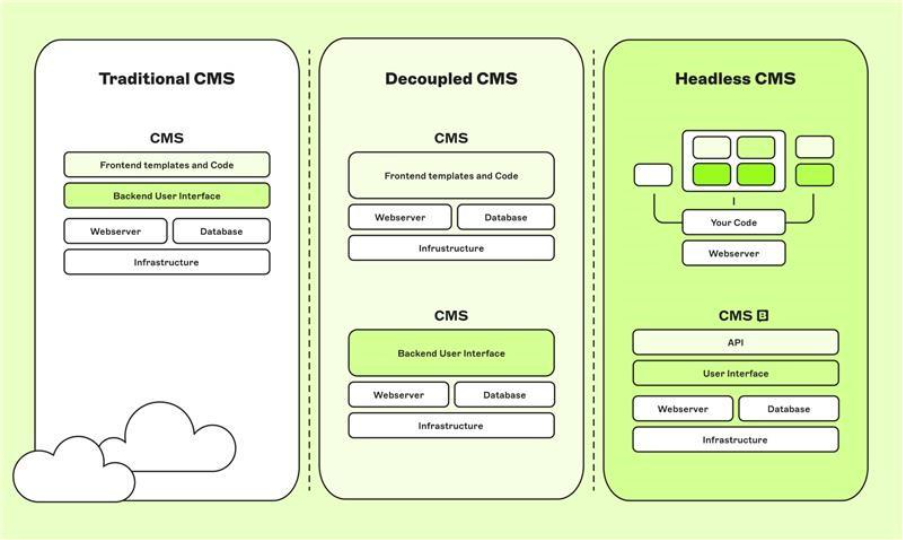
- The frontend decides what to render
- Personalization logic lives outside the CMS
This is not just a tooling gap—it’s a mindset shift.
The biggest unresolved issue: the roadmap gap
Despite demos, announcements, and messaging:
- There is no native rules engine in XM Cloud today
- There is no clear parity roadmap with XP-style personalization
- The solution heavily depends on external products
As a result, organizations are left asking:
How much personalization should we rebuild—and where should it live?
The wrong way to migrate (and why many teams struggle)
Common mistakes during XP → XM Cloud migrations:
- 🚫 Trying to migrate XP personalization as-is
- 🚫 Rebuilding every rule inside CDP or Personalize
- 🚫 Expecting marketers to self-serve immediately
- 🚫 Treating XM Cloud as “XP but SaaS”
This usually leads to:
- Cost overruns
- Delayed go-lives
- Frustrated business teams
The right way: redesign personalization before migration
Step 1: Define a real personalization strategy
Before implementing anything, ask:
- Which personalization actually impacts revenue or engagement?
- Which rules are truly valuable vs legacy clutter?
- What needs real-time decisioning vs delayed logic?
- Who owns personalization—marketing or engineering?
In practice, most XP implementations used less than 30% of their personalization rules effectively.
Step 2: Move personalization to the experience layer
XM Cloud works best when personalization is handled outside the CMS, closer to the frontend.
Practical patterns that work
- Cookie-based personalization
- Geography
- New vs returning users
- Consent-driven behavior
- API-driven decisioning
- Call CDP or Personalize APIs
- Fetch decisions at runtime
- Conditionally render components
- Edge middleware (advanced setups)
- Vercel or Netlify middleware
- Request-time personalization
- No CMS dependency
- CMS as a content source
- XM Cloud provides content variants
- The frontend selects which one to render
This approach keeps:
- Performance high
- Architecture clean
- The CMS simple
Step 3: Use CDP and Personalize strategically—not automatically
CDP and Personalize are powerful platforms.
They are also complex and expensive.
They make sense when:
- You need cross-channel orchestration
- Identity stitching matters
- ML-driven decisioning is required
- You have scale to justify the investment
They don’t make sense when:
- Personalization needs are basic
- Rules are mostly static
- Cost outweighs business value
Composable means optional, not mandatory.
A new mental model for XM Cloud
The most important shift is conceptual.
Think of XM Cloud as:
A high-performance enterprise content engine—not a personalization engine
In the XM Cloud world, personalization is:
- Distributed
- API-driven
- Frontend-owned
- Strategy-first
This is uncomfortable for XP veterans—but it’s unavoidable.
Final thought: this isn’t a downgrade, it’s a reset
XM Cloud didn’t remove personalization accidentally.
It intentionally moved away from:
- Implicit rules
- Stateful sessions
- CMS-bound decisioning
In favor of:
- Explicit strategy
- Clear ownership
- Scalable, composable architecture
Teams that re-architect personalization succeed.
Teams that try to recreate XP struggle.
Key takeaway
If you migrate personalization without redesigning it, XM Cloud will feel like a downgrade.
If you redesign personalization for a composable architecture, XM Cloud becomes an accelerator.

Related Blogs

Read More
Read More
Read More