Sitecore XM Cloud Pricing and Key Insights You Should Know
When you have been comparing digital experience platforms in the modern world, you have likely realized the extent to which Sitecore CMS has captured the attention of the latter - and rightfully so. It is among the most powerful systems governing enterprise-level digital experiences. However, as Sitecore shifts to the cloud-first solutions, dozens of companies would like to understand what Sitecore XM Cloud really costs and whether it is worth investing in.
New features, a composable architecture, and no-maintenance hosting have made XM Cloud a serious contender to teams who require speed, flexibility, and cost predictability. Before selecting this platform, let us take a tour of the pricing reasoning, what is really being offered, and the knowledge that matters.
What Is Sitecore XM Cloud?
Sitecore XM Cloud is a SaaS-based cloud engine for Sitecore CMS. You no longer need to operate servers, deployments, upgrades, or hosting; instead, you are provided with a fully managed environment where Sitecore manages the backend, allowing you to focus on building digital experiences.
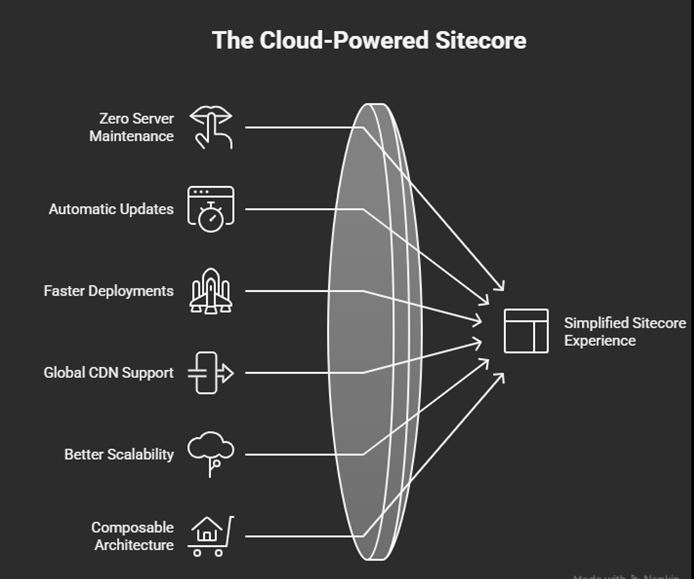
What you receive is a better, more modernized version of Sitecore - but simplified:
- Zero server maintenance
- Automatic updates
- Faster deployments
- Globally, with the help of CDN.
- Better scalability
- Ready architecture that is composable.
Why Businesses Are Switching to XM Cloud
XM Cloud eliminates both downtimes, sluggish approvals, and costly upgrades directly. The reason why most companies change is that they desire to be agile; however, they also find that they can save costs in the long term and can collaborate easily.
The following are the reasons why XM Cloud is the choice:
- No manual upgrades, never again.
- It scales automatically during traffic spikes.
- Reduced DevOps overhead
- Quickened content publishing processes.
- Squeezer architecture of integrations.
- Global audience better performance.
XM Cloud simplifies life if you operate across multiple sites and brands.
Sitecore XM Cloud Pricing: How It Works
Sitecore does not release pricing information in publications, as XM Cloud is based on an organization-specific subscription model. It is to say that your price will be based on your size and functionality requirements. However, it is not an unforeseeable structure once you know what determines the final price.
1. It’s a Subscription-Based SaaS Model
XM Cloud has an annual charge as opposed to paying one large lump sum upfront license fee in traditional Sitecore. Your subscription includes:
- Hosting
- Infrastructure
- Licensing
- Maintenance
- Updates
- Security patches
2. The Main Pricing Factors
The plan that you have is contingent on several important variables:
- Number of websites you host
- Monthly traffic + bandwidth consumption
- API usage levels
- Storage requirements
- Number of content editors
- International areas that you work in.
- Other Sitecore modules you would like to connect to.
Higher levels are usually required in larger organizations that have more than one brand or are multilingual.
3. Optional Add-Ons
Certain features are additional to your architecture, including:
- Sitecore Content Hub
- Personalize & CDP
- Sitecore Send
- Multi-region failover
- Custom integration layers
And when it requires brutal customization, it is typical to hire Sitecore developers to do the implementation, integration, and additional improvement.
Typical Pricing Range
Although Sitecore does not provide specific figures, the majority of mid-size and enterprise systems are in the premium subscription bracket, depending on volume. It is less variable to conventional hosting in that you are paying for one all-encompassing solution as opposed to individual server, upgrades, and maintenance.
What’s Included in XM Cloud by Default
XM Cloud is not a hosted CMS it is an entire experience platform. Your subscription includes:
- Fully Managed Cloud Hosting: Sitecore operates all that in the background; hence, you do not require DevOps.
- Global CDN Delivery: Your content loads quickly regardless of users' locations.
- Headless Architecture: API Use APIs to supply content to apps, devices, microsites, etc.
- Visual Builder Tools: Drag-and-drop marketer and editor page building.
- Role-Based Access: Assists with processes, authorizations, and group work.
- Automatic Updates: Remain on the current one without scheduling downtime and maintenance hours.
- Secure Infrastructure: Backups, compliance, encryption, and monitoring were included.
Key Insights You Should Know Before Choosing XM Cloud
These lessons will help you determine whether XM Cloud is the right choice for your current and future objectives.
XM Cloud Removes 80% of Your Technical Overhead
Servers are no longer required, patching is no longer required, or excessive upgrades are no longer something to worry about. The Sitecore managed model liberates your team to focus on strategy, not maintenance.
It’s Built for Multi-Site and Multi-Brand Ecosystems
When using XM Cloud, you have a centralized and scalable environment, in case your business is utilizing several websites, landing pages, or regional domains.
Integrations Are Easier With a Composable Setup
XM Cloud is compatible with CRMs, analytics tools, e-commerce, authentication vendors, and the Sitecore ecosystem. It is here that it usually pays to hire Sitecore development services to develop such integrations right at the beginning.
It Offers Predictable, Long-Term Pricing
XM Cloud transforms all that is needed into a mere subscription as opposed to the traditional Sitecore hosting, which incurred a cost on the server as well as costs incurred in updating the server.
Performance Is Significantly Better
Since it is driven by global edge delivery, pages load quickly and remain consistent across nations, a significant benefit for global enterprises.
XM Cloud vs Traditional Sitecore CMS: Quick Comparison
|
Feature |
Traditional Sitecore CMS |
Sitecore XM Cloud |
|
Hosting Model |
Self-hosted / on-premise |
Fully managed SaaS |
|
Upgrades |
Manual, expensive, time-consuming |
Automatic and seamless |
|
Deployment |
Slower, DevOps-heavy |
Fast, cloud-native |
|
Scalability |
Limited by servers |
Auto-scaling |
|
Maintenance |
Requires IT team |
Zero maintenance |
|
Best For |
Companies with large IT resources |
Teams wanting agility & speed |
Is XM Cloud the Right Fit for You?
XM Cloud is ideal if you want:
- Faster go-to-market cycles
- A CMS that scales instantly
- Better developer agility
- Minimal infrastructure management.
- A digital experience platform that is future-proofed.
- Multiple locations or international delivery.
- Composable architecture with its head cut off.
Should you experience any of the following pain points with the current version of Sitecore: it's too slow, too costly to maintain, or too hard to scale? XM Cloud will address them as soon as possible.
Conclusion
When selecting Sitecore XM Cloud, you can think about digital experience and no infrastructure. It includes automatic upgrades, worldwide performance, cleaner workflows, and a redefinable pricing model that will save costs in the long term. XM Cloud is an effortlessly powerful cloud-native CMS option that is scalable in the long run and agile for businesses seeking such a solution.
When you want to migrate, upgrade, or build with XM Cloud, having people on your side is easier. That’s where Arroact comes in. Our professional Sitecore team will guide you through the right approach to implementing XM Cloud, system integration, performance optimisation, and creating a future-ready digital experience platform.
You want strategy, development, or long-term support, Arroact guarantees your Sitecore solution is high-performance, scalable, and long-term.

Frequently Asked Questions
Related Blogs

Read More
Read More
Read More